
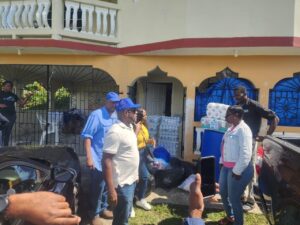
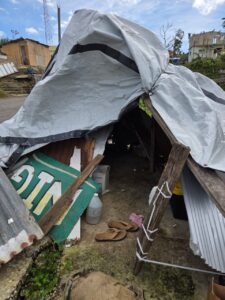
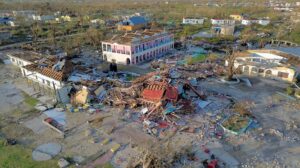
In a few weeks’ time, it will be four months since Hurricane Melissa wrought untold and unprecedented devastation on the south and west of Jamaica. I have had the painful exposure to some of the horrific destruction, first hand. The latest of which was on February 7, 2026, when the Philosophy of Education Movement of the Caribbean (PEMCA) through its outreach efforts, visited Eastern Westmoreland and Northwest St. Elizabeth to deliver relief supplies. Nearly four months later, the evidence of the devastation is unnerving and chilling, and the conditions in which so many people live make the claims of “phenomenal recovery” and “building back better” feel downright insensitive and heartless. To be clear, I am not suggesting that full recovery would have been possible in four months, rather, what I am saying is that the narratives that we have had a phenomenal recovery are not reflected in the realities so many Jamaicans in Western Jamaica face.
To be clear, I am not suggesting that full recovery would have been possible in four months, rather, what I am saying is that the narratives that we have had a phenomenal recovery are not reflected in the realities so many Jamaicans in Western Jamaica face.
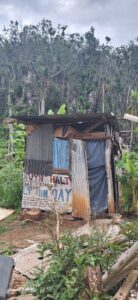
As a public commentator, I have been generally patient with the government’s response to the devastation and the crisis it has spawned, and apart from a few tweets / posts, I have been generally silent, although I was very vocal about what I thought was woefully inadequate preparation which focused heavily on bulletins and press conferences, and insufficiently on the shelters and most importantly on the prepositioning of assets such as heavy-duty equipment and (temporary) rebuilding supplies.
Thus, it is my view that contrary to the popularized narratives, our effectual preparation for the Hurricane was subpar. And while the size of the system and the scale of the devastation were unprecedented, there are many things that were in the power of the Government that it could have done better. I know this criticism will irk some, and I am happy to have that debate on what we could have done to have been better prepared.
Further jolting
As I reflected on the reality of our inadequate preparation, and the seeming haste with which the narratives of recovery have been promulgated, I have been further jolted by three troubling occurrences.
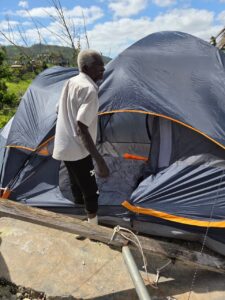
The first jolt was a report by a ratings agency which asserted that despite the devastation caused by the hurricane, the Jamaican economy remains strong. What does a “strong” economy look like? Are we satisfied with mere macroeconomic indicators? Is any consideration given to the productivity and learning losses, the psychological trauma and in some cases permanent destruction that people have suffered? There are so many schools which are without roofs and the tents provided are small and unable to withstand strong wind or heat. Do these realities count when we talk about a “strong” economy?
The first jolt was a report by a ratings agency which asserted that despite the devastation caused by the hurricane, the Jamaican economy remains strong. What does a “strong” economy look like? Are we satisfied with mere macroeconomic indicators? Is any consideration given to the productivity and learning losses, the psychological trauma and in some cases permanent destruction that people have suffered?
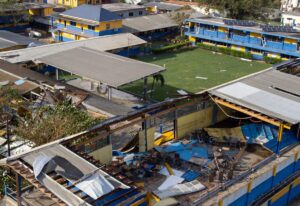
The second jolt came from some advertisements I heard from the Office of the Prime Minister which asserted how well the recovery process was going. The joyfulness of the ads felt so out of sync with the hardships I have seen on the ground. Added to this hype of phenomenal recovery, have been claims that ninety-six percent (96%) of customers of the Jamaica Public Service Company (JPSCo) have now had their electricity supplies restored. But as the PEMCA team drove through St. Elizabeth (including Southwestern to which we diverted to look at Black River), it appeared doubtful that only four (4%) of customers were without light. In addition to parts of Southwestern St. Elizabeth, many areas across Northwestern St. Elizabeth and Eastern Westmoreland still had no electricity. Teams of JPSCo crews were seen installing poles, but some areas such as Lacovia, Middle Quarters, New Market, New Works, Cottage, Leamington, and adjoining areas have had no work done by JPS and in some areas downed poles still lay across and beside roadways, some very dangerously.
The claim that 96% of JPSCo customers have had their electricity supply restored, and its probable inaccuracy, highlights a question of the actual size of our population, versus the “officially” reported size. I return to this matter later.
The claim that 96% of JPSCo customers have had their electricity supply restored, and its probable inaccuracy, highlights a question of the actual size of our population, versus the “officially” reported size. I return to this matter later.
The third jolting I received as I reflect on the many areas of western Jamaica showing the raw and palpable signs of the devastation caused by Hurricane Melissa, is an earlier report that stated that the Office of Disaster Preparedness and Emergency Management (ODPEM) had not spent any of the money it had received. That report has been eclipsed by a later report from the Auditor General which found that ODPEM had not been accounting for all the supplies it has received. This level of sloppiness rises, in my opinion, to malfeasance and raises several questions, some of which are:
- How could an office, charged with such major responsibilities of securing relief not have accurate records of same?
- Could staff be so cavalier and lazy?
- Is it that there is an unofficial wink that says, “you don’t have to record everything”? (For, to be sure, if it is not recorded, it does not exist and what does not exist cannot disappear).
- Who is the responsible Minister and what did that Minister know about the poor recordkeeping at ODPEM, when did the Minister know it and what did that Minister do about it?
Several root causes
There are several root causes to the problem of why the response to the disaster caused by Hurricane Melissa has not been as effective as it could have been. I will mention two.
Too much focus on PR
The first is what I believe is a weakness of the Holness administration of focusing too heavily on public relations (PR) and image management and not sufficiently on results. Public relations communications have their place, but a balance must be struck between image management PR and being thoughtful, sensitive, and responsive to the pain of the people.
In my view, what is needed in responding to the post hurricane realities are three main things:
- An objective assessment of the realities on the ground, including number of public facilities damaged, number of homes damaged, etc, and an estimate of the cost of restoration. So far, I think we have generally broad estimates.
- An honest timetable for when “full recovery” will be completed (or whatever plausible percentage thereof).
- An accountability matrix that allows the public, with the help of the media (traditional and new), the Auditor General, and civil society to keep tabs on the progress of recovery. For this to work, the government will have to commit to providing timely and transparent reports which should be publicly available.
Woefully inaccurate census data
The second reason, in my opinion, that the response to the disaster has not been as effective as it could have been, is that Jamaica lacks accurate census data. The 2022 census was botched. I have spoken to several dozens of people who say they were not interviewed, and several people have told me that they have spoken to several people who told them they were not interviewed. Let us be clear, a census is not done based on a sampling exercise. In a census, every adult and child is counted. Not some. Not most. All. A census is not an estimate of a population, it is the counted number, actual.
As I travelled into the hinterlands of St. Elizabeth and Westmoreland and saw areas I have never before seen, even though I have worked in, and traversed those parishes for years, I came to the view that there is a high probability that some of the homes and individuals in these parishes (and likely others) are not counted. Most of the people who tell me that they were not counted, and that many people they ask say they were not counted, live in urban areas. So, if urban areas were glossed over, what is the probability that rural ones were?
Beyond Hurricane Melissa
The lack of accurate census data affects not just the cogency and comprehensiveness of the post hurricane recovery efforts but all aspects of the country’s planning. As a country, leaders outside of the government have failed us in many ways as, for example, in the relatively national silence on the botching of this most critical body of data called the national census. The mismanagement of the census unfolded before our eyes with several deadlines missed, payments to data collection workers delayed, chronically, withdrawal of service of the data collection workers, high levels of demotivation reported.
Given that we do not know how many people actually live in Jamaica, in each parish, in each constituency, in each community, how can we plan adequately in ensuring adequate school spaces, health services, telecommunications services, and budget to meet these obligations, as well as plan for how we provide for the needs of nursing mothers, toddlers, and the elderly?
The clearing of hilly rural areas by the hurricane has exposed the density of some communities as well as the sparsely populated ones. We need to have a proper census. The data for 2022 should be discarded and a new credible census done in 2027.
The clearing of hilly rural areas by the hurricane has exposed the density of some communities as well as the sparsely populated ones. We need to have a proper census. The data for 2022 should be discarded and a new credible census done in 2027.
Canute Thompson is Professor of Educational Policy, Planning and Leadership, Pro Vice-Chancellor – Undergraduate Studies and Director of the Caribbean Centre for Educational Planning at The University of the West Indies, a social activist, and author of eight books and twenty journal articles.
Professor Thompson has earned several awards. Among them, are eight UWI Principal’s Awards – two for Best Publication (Article Category) in 2019 and in 2020 for his book, ‘Reimagining Educational Leadership in the Caribbean’; three for Most Outstanding Researcher (2020, 2021, and 2024); two in 2023 on behalf of the CCEP – for Research Activity generating the most funds and Research with the most Development Impact, and one in 2024 for Research Activity generating the most funds. In 2022 he was awarded a bronze medal in the Independent Publishers’ Book Awards, for his 2020 book, Education and Development: Policy Imperatives for Jamaica and the Caribbean.
Excellent analysis.
I agree thoroughly. Well said and we need to stop the inaccuracies and get the work done.