

In an August 2023 article on this site, titled “Making sense of Jamaica’s lowering unemployment rate”, I noted that while unemployment was at a (then) historic low, at 4.5%, the poverty rates had increased by over 50% in the three-year period from 2019 to 2021, moving from 11% in 2019 to 16.7% in 2021. The point I was seeking to highlight was the paradox, or contradiction of lowering unemployment but increasing poverty.

The latest data coming out of the Statistical Institute of Jamaica (STATIN), perpetuate and reinforce the paradox. In the latest report, STATIN states the following:
- Unemployment is now at 3.6%.
- The labour force declined by 32,900.
- This 32,900 decline, represents an increase in the number of persons outside the workforce which now grows to 714,000, reported as a 4.8% increase.
- Total labour force 1,441,000
- Total employment during the survey period 1,389,400 (96.4% of the total labour force of 1,441,000).
- Of the total labour force of 1,441,000, 51,600 are looking for work, thus classified as unemployed.

Let us try to unpack these pointed and simple statistics within a broader context.
- Jamaica’s population is about three million. With 714,000 outside workforce, this means about 24%, or a quarter, of the total population is neither employed nor looking for work. So, across Jamaica, one in four people are not looking for work.
- We have a labour force of 1,441,000 of which 714,000 are not working or looking for work, it means that almost 50% (49.5%), which is one in every two adults of working age is not looking for work.
- With a labour force of 1.4M, and 714,000 of whom are not looking for work and 51,600 looking, it means the total REAL unemployment is 714,000 plus 51,600 for a total of 765,600 or 53%.
We have a labour force of 1.4M, of which 714,000 of whom are not looking for work and 51,600 looking, it means the total REAL unemployment is 714,000 plus 51,600 for a total of 765,600 or 53%.
The stark reality
Yes, it is true that “unemployment” is measured by looking at the number of persons of working age who are not employed at all and are looking for work, but to ignore the vast number of persons who are not employed and not looking for work and arguing that somehow the small percentage unemployment rate is a sign of socio-economic success and progress, misses a major point.
And it is important that we make the distinction and discuss their implications. The stark reality is that over half of the Jamaican population is not employed (and in that number, both among those who are looking for work and those not looking), many are unemployable.
But it gets troublingly worse. Of the 1,441,000 people in the workforce, only about a quarter (27%) has post-secondary education and training. This means that over one million people of the 1,441,000 do not possess knowledge and skills sufficient to enable them to be innovators, create good paying jobs for themselves and others, rise from actual poverty or reduce their risks of falling into and staying in poverty, and many are likely, without major interventions, to continue earning minimum wage or near that for a long time.
Of the 1,441,000 people in the workforce, only about a quarter (27%) has post-secondary education and training. This means that over one million people of the 1,441,000 do not possess knowledge and skills sufficient to enable them to be innovators, create good paying jobs for themselves and others, rise from actual poverty or reduce their risks of falling into and staying in poverty.
Other reporting data indicate that Jamaica’s poverty rate in 2025 was 7.8% down from 8.2% in 2024, which was down by about half from the 16.7% in 2021. The questions, (the paradoxes), which boggle the mind are these:
- How can over half of a population be unemployed and less than a tenth is in poverty?
- Could it be that the definitions of poverty are skewed or could it be that the over 50% not employed are provided support from other sources and thus are not in poverty?
- What is the role of scamming and other illegal activities?
- What is the role and extent of the underground economy?
Jamaica’s poverty rate in 2025 was 7.8% down from 8.2% in 2024, which was down by about half from the 16.7% in 2021. The question, the paradox, which boggles the mind is: How can over half of a population be unemployed and less than a tenth is in poverty? Could it be that the definitions of poverty are skewed or could it be that the over 50% not employed are provided support from other sources and thus are not in poverty?
Revisiting some solutions
I have been researching and writing on this issue of overcoming poverty for years. I wish to highlight some of the recommendations I have made and introduce some new ones. I offer three.
- Government should make the teaching of agriculture and related fields such as aquaculture (with both urban and rural applications / methods) mandatory in primary and secondary schools (not just STEM schools, which should be centres for large scale operations). Simultaneously reexamine, with a view to reversing, the policy of using high nutrient arable lands for housing. Also simultaneously increase the level / depth of soil restoration that bauxite mining companies should restore after mining /extraction, and finally provide greater planting / breeding, production, harvesting, storage, packaging, supportive value chain product enhancements, and marketing services to farmers to support local consumption and export.

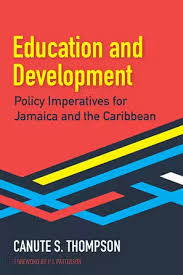
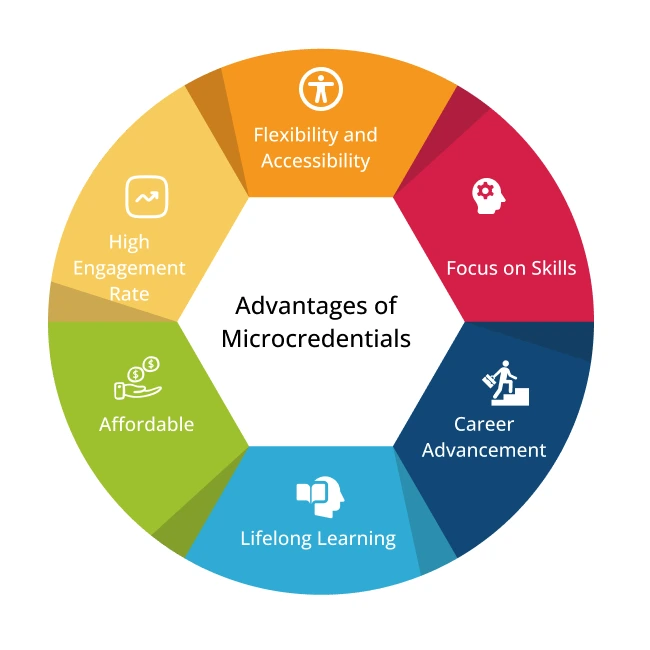
- Government should create greater access to post-secondary skills-development education and training through a mix of short- medium- and long-term financing strategies, many of which I discussed in my 2020 book titled Education and Development: Policy Priorities for Jamaica and the Caribbean. At the same time tertiary educational institutions should do more to facilitate access to their programmes. I am pleased to share that at The UWI, one of the many initiatives we are undertaking to improve access is the revision of our micro-credentialing policies and the offer of a wider range of areas of training and upskilling in micro-credentials.
- Strengthen the use of technology in the work force to enable more efficient uses, such as working from home and limiting travel for tasks that can be effectively performed remotely. At the same time, creating enabling environments for non-conflicting approaches to persons holding and delivering in multiple jobs. This will of course require revamping the methods used for performance measurement.

Canute Thompson is Professor of Educational Policy, Planning and Leadership, Pro Vice-Chancellor – Undergraduate Studies and Director of the Caribbean Centre for Educational Planning at The University of the West Indies, Mona Campus, a social activist, and author of eight books and twenty journal articles.
His academic achievements include:
- Two Principal’s Awards in 2020 for Most Outstanding Researcher and Best Publication for his book, Reimagining Educational Leadership in the Caribbean.
- Two Principal’s Awards in 2023 for research activity generating the most funds, and research activity with the most development impacts, serving as Project Director for a project executed by the Caribbean Centre for Educational Planning.
- A 2022 Bronze place winner in the Independent Publisher Book Awards for his book, Education and Development: Policy Imperatives for Jamaica and the Caribbean.
- A 2021 finalist in The Vice-Chancellor’s Award for Excellence for all-round excellent performance in Outstanding Teaching, Outstanding Research Accomplishments, Outstanding Service to the University Community, Outstanding Public Service.
- A 2021 Principal’s Award for Most Outstanding Researcher.