

Jamaica has been experiencing an unprecedented and welcome decline in its murders in the last two years, with a decline of 22% in 2024 compared to 2023, and a doubling of that percentage point decline in 2025 over 2024, of 43%. The reported homicides for 2025 of 673 is the lowest in thirty years. The police and the government, as well as other stakeholders, deserve credit.
But there are some parallel troubling statistics related to police killings. According to a Gleaner report of May 5, 2026, there were 310 police killings in 2025, a 64% increase over 2024, and 2024 had a 26% increase over 2023.
It is not unreasonable, in my view, for there to be celebration of the declines in murders and concern about the rapid rise in police killings.
It is not unreasonable, in my view, for there to be celebration of the declines in murders and concern about the rapid rise in police killings.
It is in the context of these two sets of data, which are moving in opposite directions, that the debate over the issue of the use of Body-worn Cameras, by the police, may be examined.
A brief recap of the public discourse on body-worn cameras (BWCs)
In a November 14, 2024 release from the Office of the Prime Minister, the Prime Minister is reported to have “…affirmed the government’s firm resolve to deploying body-worn cameras across the JCF”. The Prime Minister is further reported to have said that:
“…cameras will be used as a core tool for accountability and transparency in the police force, (and that) …there is no conflict, …no indecisiveness. It is something (the Gov) (is) doing and will continue to do”
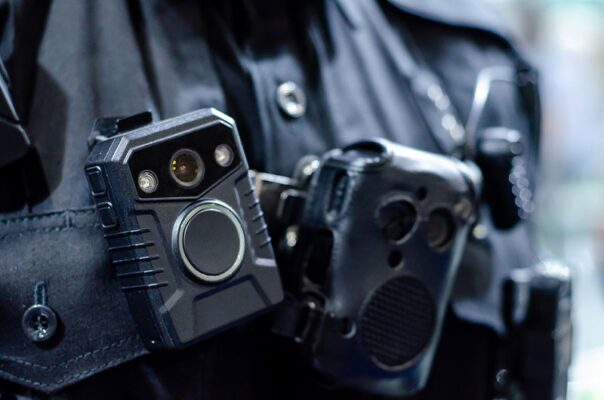
In highlighting the commitment of the government to the use of BWCs, the Prime Minister asserted:
“We have in procurement now over $200m for cameras. We procured last time about $70M worth…and we continue to procure. So, I want the country to be assured that the government is 100% committed to having body-worn cameras become a standard feature of the police officer’s kit”.
The Prime Minister further clarified, however, that the cameras themselves, were the least critical piece of the overall apparatus of the camera system and that the back-office portion (servers etc.,) were not yet in place so the cameras could not be deployed.
While the Prime Minister’s statement of November 2024 makes reference to a purchase of $70M “last time”, it is unclear when that “last time” was. However, about the same time, in pushing back at what he called “false narratives”, Police Commissioner Dr Kevin Blake, said the required infrastructure for the cameras was in place since 2023 and over 1,000 units were already deployed.
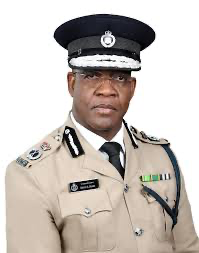
So, we have an obvious contradiction which (still) requires clarification and alignment. On the one hand we have the Prime Minister, in November 2024, saying the government was committed to making the cameras standard, but the infrastructure was not yet in place (though some cameras were already bought). On the other hand, we have the Police Commissioner saying the infrastructure was in place since 2023.
So, we have an obvious contradiction which (still) requires clarification and alignment. On the one hand we have the Prime Minister, in November 2024, saying the government was committed to making the cameras standard, but the infrastructure was not yet in place (though some cameras were already bought). On the other hand, we have the Police Commissioner saying the infrastructure was in place since 2023.
The assertions from the Police Commissioner went further. In a Force Order titled, “Embracing Accountability: The JCF’s Continued Commitment to Body Worn Cameras” (sic), the Commissioner states:
“In today’s world, transparency and accountability are essential for public trust in law enforcement. Across the globe, body-worn cameras (BWCs) have become a vital tool for police forces, serving as an impartial witness to interactions between officers and the public.”
The Commissioner disclosed, “We have spent over $2 billion in enhancing our infrastructure over the last 3 years”.
No where in those Force Orders did the Police Commissioner indicate that deployment of the cameras would be limited to certain contexts and formations, or that there were some situations in which their use was inappropriate. Indeed, he reiterated that BWCs were central to transparency, and a vital tool for conducting investigations, and concluded that they serve as “…a bridge to greater trust, accountability, and justice”.
In what could amount to outdoing himself, the Police Commissioner concluded by saying that BWCs are important in supporting investigations “…particularly those involving police-involved shootings”. He added, “We need to do all we can to support the investigation of police-involved fatal shootings”.
In what could amount to outdoing himself, the Police Commissioner concluded by saying that BWCs are important in supporting investigations “…particularly those involving police-involved shootings”. He added, “We need to do all we can to support the investigation of police-involved fatal shootings”.
The perspectives of the Minister of National Security
The assertions by the Commissioner of Police were emphatic and unambiguous that BWCs are central to trust-building, transparency, and accountability. He did not offer a single point of exception in relation to situations in which their use would be inappropriate.
Notwithstanding the emphatic and unambiguous statement of the Commissioner, the Minister of National Security has stated that the use of BWCs was not appropriate for policing situations in which citizens involved in confrontation with the police, are firing high-powered weapons. But is it not precisely in those situations (in which citizens may be killed) that the cameras would be most needed? And is it not precisely those kinds of situations, involving police shooting, to which the Police Commissioner refers when he speaks of the need to have BWCs as “impartial witness to interactions between officers and the public”?
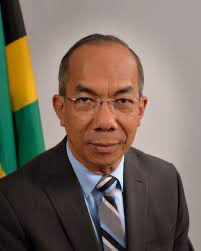
There have been several rebuttals of the assertions of the Minister of National Security, including from policing and law-enforcement experts. These rebuttals are fully in line with the philosophy and (desired) practice described by the Commissioner of Police as well as the Prime Minister. Once such person who dismissed the minister’s position was Mark Shields, former Deputy Commissioner of Police and international security expert who argued that the minister’s position is at odds with global policing best practice. Against this background, it would serve the ends of justice and transparency for both the Prime Minister and Police Commissioner to weigh in on the perspectives of the Minister of National Security. Alternatively, the Minister has a duty to respond to the members of the public, (which include law enforcement experts) taking account of the record of what his boss, the Prime Minister and his chief law enforcement manager, the Police Commissioner have said.
There should be no doubt in the public’s mind concerning whether the Minister of National Security believes in the comprehensive deployment of a law enforcement tool that is widely accepted globally and fully supported by the Prime Minister and Police Commissioner.
There should be no doubt in the public’s mind concerning whether the Minister of National Security believes in the comprehensive deployment of a law enforcement tool that is widely accepted globally and fully supported by the Prime Minister and Police Commissioner.
Canute Thompson is Professor of Educational Policy, Planning and Leadership, Pro Vice-Chancellor – Undergraduate Studies and Director of the Caribbean Centre for Educational Planning at The University of the West Indies, Mona Campus, a social activist, and author of eight books and twenty journal articles.
His academic achievements include:
- Two Principal’s Awards in 2020 for Most Outstanding Researcher and Best Publication for his book, Reimagining Educational Leadership in the Caribbean.
- Two Principal’s Awards in 2023 for research activity generating the most funds, and research activity with the most development impacts, serving as Project Director for a project executed by the Caribbean Centre for Educational Planning.
- A 2022 Bronze place winner in the Independent Publisher Book Awards for his book, Education and Development: Policy Imperatives for Jamaica and the Caribbean.
- A 2021 finalist in The Vice-Chancellor’s Award for Excellence for all-round excellent performance in Outstanding Teaching, Outstanding Research Accomplishments, Outstanding Service to the University Community, Outstanding Public Service.
- A 2021 Principal’s Award for Most Outstanding Researcher.