
A former Jamaica Teachers’ Association (JTA) president called me recently. He, like other former presidents, had done study tours of education systems in other countries and he had a burning question which he wanted to discuss. He had visited Singapore recently and was reflecting on the differences between Singapore and Jamaica specifically their economy and education system. He asked “Would it be possible to assess where Jamaica might have been today, if we took the decisions Singapore took about their society, economy, and education system sixty years ago?”
“Would it be possible to assess where Jamaica might have been today, if we took the decisions Singapore took about their society, economy, and education system sixty years ago?”
He said he was wrestling with this question for days and was awakened that day from 4:00 a.m. thinking about it and wanted to talk. He had a lot to say and much of what he said answered his own question. But we had a very extensive exploration.
After offering a base response to his question, that “We will never know”, I went on to share three observations as follows:
- Culturally, there are differences between Singapore and Jamaica. Unlike Jamaica which has an active citizenry and a strong culture of citizens talking back to and opposing governments’ policy prescriptions, Singaporean citizens have tended, over the better part of last sixty years, to be compliant and obedient.
- The deference shown by Singaporean citizens to its leaders, while related in part to cultural characteristics, was also rooted in the fact that there were and are high levels of trust between leaders and citizens in Singapore. (Indeed, the levels of trust between leaders and citizens in Singapore have consistently been above 70%).
- The trust and confidence citizens of Singapore have in their leaders is rooted in large part in the fact that the leaders articulated a vision of a future in which the people could believe. And, as I will show later, leaders hold themselves deeply accountable to the people such that there is zero tolerance in Singapore for corruption.
What emerges from this is that citizens in Singapore are not merely deferential to their leaders based on cultural norms, but also because they believe the vision of a future the leaders sell to them. They have the experience of living in, and benefitting from, the fruits of that vision. In Singapore, there is no dual accountability system wherein leaders get away with wrongdoings and ordinary citizens are punished for similar or lesser misdeeds.
In Singapore, there is no dual accountability system wherein leaders get away with wrongdoings and ordinary citizens are punished for similar or lesser misdeeds.

Thus, in answer to my friend’s question, I summarised that, if Jamaica were to have taken the route Singapore took, and taking account of our cultural differences, our chances of success would depend on excelling in the other two areas, namely the existence of a culture of trust, which is rooted in a shared vision and a culture of (fearless and fierce) accountability.
The 1990’s: TQM and TQC
I then offered my friend a metaphor of how to understand the story of Jamaica vs Singapore and to answer his curious epistemological pose of “What if…”.
I shared with him that in the 1990s there was a management buzz phrase called TQM the abbreviation for Total Quality Management. This management approach, which was pioneered by W. Edwards Deming, Joseph Juran, and Philip Crosby, among others, emphasised concepts such as RFT = Right First Time, and CI = Continuous Improvement as doctrines of effective management. These doctrines and principles were being promulgated in a context of high error rates in production processes and correspondingly high levels of customer dissatisfaction, across several industries. TQM was seen as a cure.
But I hastened to point out to my friend that I had the benefit of being exposed to a more insightful approach to the discipline and doctrine of “total quality” through a method call TQC = Total Quality Culture. This approach was rooted in the principle which says that “management” (aka managers) alone cannot make quality happen. But more subversively, where managers are not committed to total quality, mandates cannot be effective. Thus, the paradigm of TQC was two-fold:
- The entire organisation must be reset and reimagined to become quality conscious. Not just management. And where you have these bad habits of corner-cutting by managers, mandates change very little.
- To get the entire organisation on board, and get management to behave differently, what is needed is not mandates, but mindset changes. Therefore, what is needed is a new culture. New attitudes, new outlooks, new belief systems. And to have this new ethos, you need a new character. It is character that informs and shapes ethos. Stanley Hauerwas in his book A Community of Character: Toward a Constructive Christian Social Ethic, makes the case that how we behave including how we relate is a function of our character and so a society is defined its character. The behaviours we observe in a society, whether those behaviours are acts of kindness, compassion, dishonesty or greed, are all informed by character.
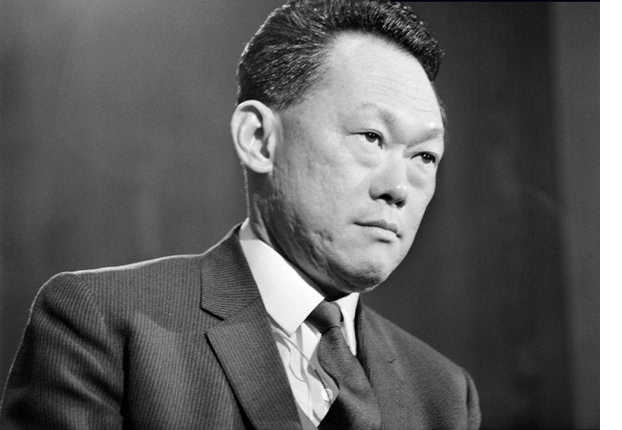
There is a story of an attempt made by a superpower to bribe the Singaporean government. Then Prime Minister of Singapore, Lee Kuan Yew rejected. The superpower denied it. Kuan Yew then threatened to release the audio of the conversation, at which time the superpower backed down. The moral of the story is that when a country has a particular kind of character, it cannot be bought.
Whither Jamaica
So, in answer to my friend, I told him that Jamaica still, can become like Singapore with high levels of innovation, production, earnings, clean streets, clean communities, high paying jobs, first rate education system and social services etc. But these cannot be mandated. The attainment of these requires a cultural reset. Jamaicans will not likely surrender their autonomy and rights to any political system or leader. Having laws which give elected officials sweeping powers will not lead Jamaica to a new place. The new cultural mindset needed is a change in the culture of leadership, management, and governance and a new sense of responsibility for building trust.
Jamaica still, can become like Singapore with high levels of innovation, production, earnings, clean streets, clean communities, high paying jobs, first rate education system and social services.

The new cultural mindset needed is a change in the culture of leadership, management, and governance and a new sense of responsibility for building trust.
Trust is built in a society where leaders hold themselves to the same, or higher (never lesser) standards of accountability to which citizens are held. In Singapore, there are three pillars on which trust is built:
- Proven performance: The evidence is in the quality of life of citizens
- Zero-tolerance of corruption: People who are found to be corrupt go to jail.
- Transparency and truth: There are open and ongoing communications between elected officials and citizens about difficult choices and tradeoffs.
Jamaica heading there but the experiment was derailed
I then dropped a small bomb on my friend. I told him that I recall a time in my childhood when I remember a leader articulating a captivating vision about what Jamaica could become. The realisation of that vision required access to education, citizen participation, inter-party co-operation, increased production, sense-of-self and nationhood transformation, and improved institutional systems for health, particularly at the primary healthcare level, housing, family life, and intraregional cooperation.
I disclosed to my friend that I was one of those lucky Jamaicans who attended high school free of charge, for although my father was a hardworking farmer and my mother a guesthouse supervisor, they could not send us all to high school and pay the fees. Free education gave me a chance and a shot.
But this vision was derailed not because it was flawed, but because it was working, despite imperfections in its implementation. As the released cables and notes of meetings of the US State Department and the Central Intelligence Agency of the USA show, the development experiment in Jamaica, using education transformation, was derailed because of the fear that if many Jamaicans became highly educated, they would spread their influence across the Caribbean and if that happens, the USA would have difficulty “controlling” the region.
There is yet the opportunity for a reset. Jamaican leaders must consider the vision they are selling to the people, how it is being sold, how to attain that vision, and how to secure the people’s trust.
Canute Thompson is Professor of Educational Policy, Planning and Leadership, Pro Vice-Chancellor – Undergraduate Studies and Director of the Caribbean Centre for Educational Planning at The University of the West Indies, Mona Campus, a social activist, and author of eight books and twenty journal articles.
His academic achievements include:
- Two Principal’s Awards in 2020 for Most Outstanding Researcher and Best Publication for his book, Reimagining Educational Leadership in the Caribbean.
- Two Principal’s Awards in 2023 for research activity generating the most funds, and research activity with the most development impacts, serving as Project Director for a project executed by the Caribbean Centre for Educational Planning.
- A 2022 Bronze place winner in the Independent Publisher Book Awards for his book, Education and Development: Policy Imperatives for Jamaica and the Caribbean.
- A 2021 finalist in The Vice-Chancellor’s Award for Excellence for all-round excellent performance in Outstanding Teaching, Outstanding Research Accomplishments, Outstanding Service to the University Community, Outstanding Public Service.
- A 2021 Principal’s Award for Most Outstanding Researcher.