
An apology without repair is an admission of a debt followed by a refusal to pay it.
Ahead of the 2026 Commonwealth Summit in Antigua and Barbuda, British Prime Minister Andy Burnham said he was open to a formal apology for Britain’s role in slavery. That is a welcome assertion. But in the same breath he ruled out financial reparations, on the grounds that people alive today cannot be held liable for historic wrongs. Two years ago, Downing Street would not go as far as Burnham has now gone.

Many decent people in Britain and here at home agree with Prime Minister Burnham. It is true that no Briton alive today owned slaves, and no Caribbean person alive today was enslaved. Thus, as far as this view is concerned, the matter is closed. This position is a serious objection, and it deserves a serious answer, and the answer is in Britain’s own accounts.
Many decent people in Britain and here at home agree with Prime Minister Burnham. It is true that no Briton alive today owned slaves, and no Caribbean person alive today was enslaved. Thus, as far as this view is concerned, the matter is closed. This position is a serious objection, and it deserves a serious answer, and the answer is in Britain’s own accounts.
You are invited to respond to the article and view other articles at leadershipreimagination.com.
Here is the answer from Britain’s accounts. On February 1, 2015, the British Treasury quietly made its last payment on a loan it had taken out in 1835. The loan had been raised to pay compensation to the owners of enslaved people when Britain abolished slavery. It took 180 years to clear. The public found out only in 2018, when the Treasury posted the fact on social media as a light-hearted “Friday fact” and then deleted it after an outcry.
Keep that date in mind as you weigh what Britain’s Prime Minister has just told the Caribbean.
The debt Britain did honour.
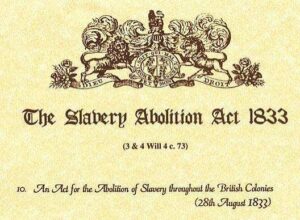
The Slavery Abolition Act of 1833 promised the owners £20 million. That was about 40 per cent of the Treasury’s income for a whole year. Part was paid in government stock that gave the owners an income, and the rest was borrowed. More than half the money for the Caribbean colonies went to owners and their creditors living in Britain. It built country houses, banks and, later, railways.
British taxpayers then serviced that debt for six generations. None of them had owned anyone. Nobody suggested they should be excused. The debt belonged to the British state, and the state used taxes imposed on Britons in each generation since, to repay the loan. Here is the part that should stop every objecting British and Caribbean reader conscious. From 1948 onward, those taxpayers included the Windrush generation and their children. For almost seventy years, the descendants of the enslaved living in Britain helped pay off the debt incurred by the state to pay the people who owned their ancestors as slaves. Let that sink in.
British taxpayers then serviced that debt for six generations. None of them had owned anyone. Nobody suggested they should be excused. The debt belonged to the British state, and the state used taxes imposed on Britons in each generation since, to repay the loan. Here is the part that should stop every objecting British and Caribbean reader conscious. From 1948 onward, those taxpayers included the Windrush generation and their children. For almost seventy years, the descendants of the enslaved living in Britain helped pay off the debt incurred by the state to pay the people who owned their ancestors as slaves. Let that sink in.
The enslaved paid for their own freedom.
We are often told that Britain bought the freedom of the enslaved. The record says otherwise. When slavery ended on 1 August 1834, the people who had been owned were not set free. They were made “apprentices” and forced to work up to 45 hours a week, unpaid, for the same masters. That lasted until 1838. This means that emancipation was paid for twice. Once by the British Treasury, to the owners. And once by the freed themselves, in four more years of unpaid labour. Only the owners were ever compensated. If owners deserved compensation why not the children of the enslaved? And let us not forget, the British carried this burden to the slave owners for almost 200 years.

When slavery ended on 1 August 1834, the people who had been owned were not set free. They were made “apprentices” and forced to work up to 45 hours a week, unpaid, for the same masters. That lasted until 1838. This means that emancipation was paid for twice. Once by the British Treasury, to the owners. And once by the freed themselves, in four more years of unpaid labour. Only the owners were ever compensated.
Chattel twice.
The harm did not end in 1838. You can still see it from almost any hillside in the region.
In Barbados, freedom came without land. Under the Located Labourers Act of 1840, the freed could live on scraps of estate land in return for their labour, but the planter could put them off at short notice. So, they built light wooden houses that could be taken apart and carried away. We still call them chattel houses. Chattel means movable property. Think about that. Under slavery, our ancestors were chattel. After freedom, the law permitted them to own only a chattel house. It took an independent Barbados, in 1980, to give tenants the right to buy the land under their homes, and families are still receiving titles today. Our own governments are still paying to unwind a land system Britain designed and left behind.
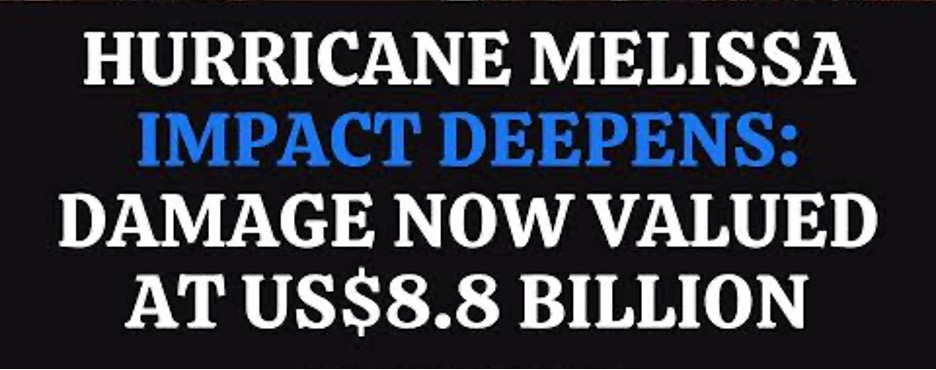
Every hurricane season shows the cost. Hurricane Melissa did US$8.8 billion of damage in Jamaica last year, 41 per cent of the country’s GDP, and homes were the largest share. Beryl damaged or destroyed more than 95 per cent of homes on Carriacou and Petite Martinique. International research shows that families without secure title live in weaker homes and are more often shut out of rebuilding aid. The painful reality is that the poorest rebuild the same way, on the same insecure land, and wait for the next storm.
Every hurricane season shows the cost. Hurricane Melissa did US$8.8 billion of damage in Jamaica last year, 41 per cent of the country’s GDP, and homes were the largest share. Beryl damaged or destroyed more than 95 per cent of homes on Carriacou and Petite Martinique. International research shows that families without secure title live in weaker homes and are more often shut out of rebuilding aid. The painful reality is that the poorest rebuild the same way, on the same insecure land, and wait for the next storm.
Our own failures do not cancel the debt.
I will not pretend that every problem in the Caribbean is Britain’s doing. Some of our governments have wasted money. Some are perceived by citizens, in various surveys, as being corrupt. The painful truth is that trust in public officials in the Caribbean, including elected officials, is low. We cannot ignore that. But a debtor is not released because the creditor later managed money badly. Sixty years of independence could not undo three centuries of slavery, especially when we began independence with so little public capital. Economists studying the Americas have found that places built on plantation slavery remain poorer today than comparable places that were not. Nor should the fear that reparations might be misused soften the claim. That fear is reasonable, and any money must be ring-fenced and independently audited. But in 1835 nobody asked the planters to prove they would spend their compensation wisely. Britain paid because, justifiably or not, it accepted the money was owed.
Economists studying the Americas have found that places built on plantation slavery remain poorer today than comparable places that were not.
In Part 2, I will share my perspectives on the mechanics of reparations payments.
Sources
Burnham remarks: Al Jazeera, 31 October 2026, https://www.aljazeera.com/news/2026/10/31/burnham-opens-door-to-formal-apology-for-britains-slave-trade
Compensation loan, 2015 redemption and 2018 Treasury post: Full Fact, https://fullfact.org/economy/slavery-abolition-act-loan/
£20 million, stock payments and share to Britain-based owners: Draper (2007), History Workshop Journal, https://doi.org/10.1093/hwj/dbm030; Bennett and Anson (2025), Enterprise and Society, https://doi.org/10.1017/eso.2025.1
Apprenticeship, up to 45 unpaid hours a week: Heuman (2023), New West Indian Guide, https://doi.org/10.1163/22134360-bja10026
Tenantries Freehold Purchase Act 1980: Barbados Government Information Service, https://gisbarbados.gov.bb/blog/tenantry-freehold-purchase-scheme-still-available/
Hurricane Melissa damage: World Bank, 19 November 2025, https://www.worldbank.org/en/news/press-release/2025/11/19/world-bank-idb-estimate-hurricane-melissa-damage-to-jamaica-totals-all-time-high-of-us-8-8-billion
Hurricane Beryl housing damage: IFRC, https://www.ifrc.org/article/hurricane-beryl-hard-hit-islands-preparation-paid-rapid-response-recovery-complicated
Land tenure and exclusion from reconstruction aid: Sarmiento, Sandoval and Jerath (2019), Progress in Disaster Science, https://doi.org/10.1016/j.pdisas.2019.100054
Plantation slavery and present-day development: Bruhn and Gallego (2012), Review of Economics and Statistics, https://doi.org/10.1162/rest_a_00218
UK GDP of about £3 trillion in 2025: ICAEW, https://www.icaew.com/insights/viewpoints-on-the-news/2026/apr-2026/chart-of-the-week-a-3tn-economy
Canute Thompson is Professor of Educational Policy, Planning and Leadership, Pro Vice-Chancellor – Undergraduate Studies at The University of the West Indies, a social activist, and author of eight books and over twenty peer-reviewed journal articles. He has won over a dozen academic and leadership awards.
His academic achievements include:
- 2025: Finalist in the 2025 Goody Business Book Awards, “Leadership – Think Differently” Category for the book, Reimaginative Leadership: Concepts and Applications.
- 2024: Principal’s Award – Most outstanding researcher activity for the Academic Year 2022/23 (shared with a colleague)
- 2023: Principal’s Award – Made to the Caribbean Centre for Educational Planning (CCEP) for Research Activity generating the most funds. Role: Project Director.
- 2023: Principal’s Award- Made to the Caribbean Centre for Educational Planning (CCEP) for Research Activity with the most development impacts. Role: Project Director.
- 2022: Bronze place winner in the 2022 Independent Publisher Book Awards for the book, Education and Development: Policy Imperatives for Jamaica and the Caribbean, published by the UWI Press in 2020
- 2021: Finalist in The Vice-Chancellor’s Award for Excellence for all-round excellent performance in Outstanding Teaching, Outstanding Research Accomplishments, Outstanding Service to the University Community, Outstanding Public Service.
- 2021: Principal’s Award – Most Outstanding Researcher
The views expressed here are not necessarily those of The University of the West Indies.