
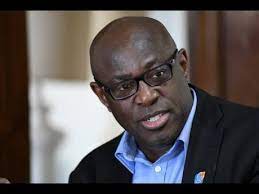
Jamaica has had, what I would describe as, an unsteady and equivocal relationship with the Integrity Commission and more broadly the fight against public corruption. I describe this relationship as unsteady for four reasons:
- Using the Corruption Perception Index where a score of 100 means zero corruption, Jamaica has almost consistently earned a score in the 40’s.
- A large majority (about 80%) of Jamaicans view corruption as a serious problem in government, with nearly half of Jamaicans thinking the problem has become worse over time, and many think the government is handling the fight against corruption poorly.
- Corruption (in the form of bribes, kickbacks, project overpricing, questionable building approvals, etc.) robs the public of about 5% of GDP each year (over $100B); undermines the operations of the public service; deprives communities; schools; and hospitals of vital resources; and places communities at risk.
- A May 2026 Market Research Services survey found that 30% of people surveyed believe that corruption is necessary for “peace and happiness”.
Despite Jamaica’s consistent low ranking on the Corruption Perception Index (CPI), the fact that 80% of citizens see corruption as a major problem, some citizens (3 in 10) see corruption as necessary. What is even more startling is that various government Members of Parliament (including some who held or hold cabinet positions) have either proposed measures to weaken the Integrity Commission, publicly criticised the Commission, called for the Commission to be controlled by decisions made externally, called for MPs not to cooperate with the Commission’s investigation or fact-finding exercises, or otherwise accuse the Commission of acting in bad faith.
What is even more startling is that various government Members of Parliament (including some who held or hold cabinet positions) have either proposed measures to weaken the Integrity Commission, publicly criticised the Commission, called for the Commission to be controlled by decisions made externally, called for MPs not to cooperate with the Commission’s investigation or fact-finding exercises, or otherwise accuse the Commission of acting in bad faith.
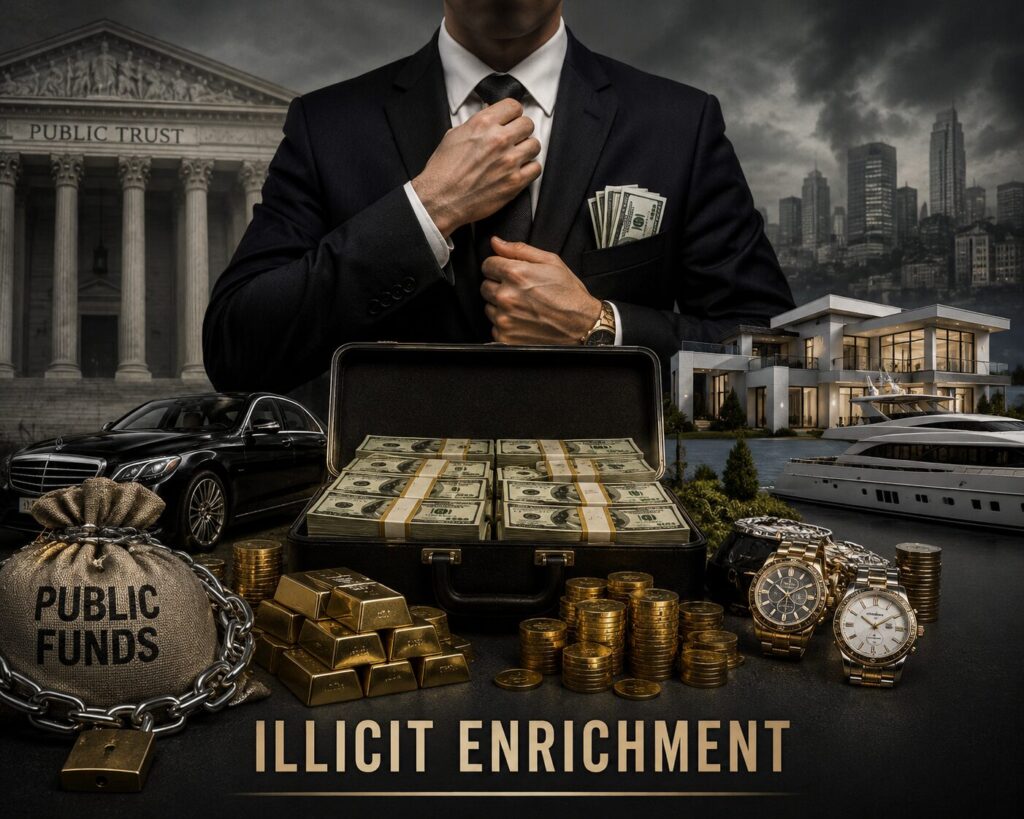
Added to the low CPI scores, and the concerns expressed by a majority, is the harsh fact that since 2018 at least ten members of parliament (of which the Opposition says none are from its side) are said to be under investigation for the crime of illicit enrichment.
Things are simply not adding up. If most people see corruption as a problem, then, one would expect that the response of the government would be to address the problem through strengthening the Commission. But the responses have not suggested this. Instead, as I have stated above, there have been statements from governmental officials which signal that they do not wish to fully cooperate with the Integrity Commission. Again, if the country’s scores are low, then one would expect that measures would be taken that would result in the improvement of those scores, and one such measure would be the strengthening of the work of the Commission.
Illicit Enrichment
One of the pointless and unhelpful issues of public discussion in the last five or so years has been a kind of contest between the Jamaica Labour Party (JLP) and the People’s National Party (PNP) about which is more corrupt. That contest has done little, is anything, to advance the country’s fight against corruption. Yet, identifying public officials who are under investigation for illicit enrichment has become a kind of litmus test of whether the Integrity Commission is getting its work done and public officials are demonstrating their commitment to the ideals of integrity.
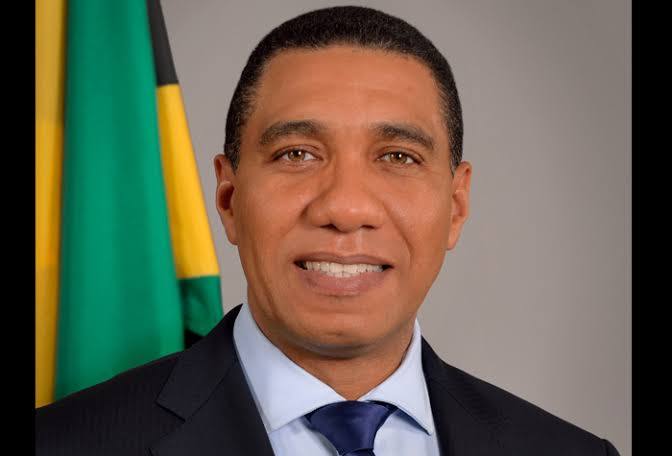
In the last three years there have been two major disclosures concerning illicit enrichment. The first is that it emerged that the Prime Minister, Dr. Andrew Holness, was in fact under investigation for illicit enrichment. The case remains inconclusive, with an unresolved referral of his case to the Financial Investigations Division (FID). The other case is that of a Cabinet Minister, Dr. Andrew Wheatley who has been recommended by the Integrity Commission to be charged with the crime of illicit enrichment and three other charges. No charges have yet been made.

It is to be noted that the Prime Minister has not had his integrity (statutory) declarations certified by the Integrity Commission, since 2021, and in response to the disclosure that he was under investigation for illicit enrichment, he has challenged the report of the Integrity Commission, and has sought various court orders including that the provision in the law which makes illicit enrichment a crime, be struck out.
It is to be noted that the Prime Minister has not had his integrity (statutory) declarations certified by the Integrity Commission, since 2021, and in response to the disclosure that he was under investigation for illicit enrichment, he has challenged the report of the Integrity Commission, and has sought various court orders including that the provision in the law which makes illicit enrichment a crime, be struck out.
This attempt to strike out the provision in the law which makes illicit enrichment a crime is curious on its own merit, but is even more curious given that the Integrity Commission Act was passed under Prime Minister Holness, although the Bill, which became the law, was drafted and advanced to the point of passage by the PNP administration of 2012 to 2016.
`This apparent discomfort with the provision which makes illicit enrichment a crime, where such discomfort has led to attempts at it being repealed, is, in my view, another instance of equivocation about and dancing around corruption. It is instructive that we be reminded, however, that the Executive (Cabinet) develops, amends, and repeals legislation which are then taken to parliament (the Legislature) for approval.
The Court has no power to make legislation, its duty is to interpret and rule based on that interpretation and the facts that give rise to the need to offer interpretation. Thus, it is within the power and authority of the Government to amend the Integrity Commission Act and remove the provision that makes illicit enrichment a crime, if it is of the view that illicit enrichment should not be a crime. The fact that the Prime Minister, who is the head of Executive and who determines what laws should be developed, amended, and repealed decides to ask the Court to strike out a law which he passed, after the Attorney General and the Governor General would have both satisfied themselves that it is constitutional, is worth pondering.
The fact that the Prime Minister, who is the head of Executive and who determines what laws should be developed, amended, and repealed decides to ask the Court to strike out a law which he passed, after the Attorney General and the Governor General would have both satisfied themselves that it is constitutional, is worth pondering.
Parliament’s Oversight Committee
The Integrity Commission (IC) is a Commission of Parliament which means it reports to Parliament and not to a Minister or to the Cabinet. There are currently five (5) Commissions of Parliament, including the Integrity Commission. These are the Electoral Commission of Jamaica (ECJ), the Independent Commission of Investigations (INDECOM), the Public Defender, and the Office of the Children’s Advocate (OCA). There was a sixth, the Political Ombudsman, but this has now been subsumed into the ECJ.

Unlike all the other Commissions, the IC has an Oversight Committee. That Oversight Committee is chaired by a government MP, currently Pearnel Charles Jr. who succeeded Edmund Barlett. In its most recent sittings, the Oversight Committee has discussed whether the IC is fit for purpose and there have been proposals to assign some of its work, specifically the review of the statutory declarations of Members of Parliament to the FID. Most public commentators (and the Parliamentary Opposition) have expressed disagreement with that suggestion. But what strikes me as being somewhat irregular, is the situation whereby there is the probability that members of the Oversight Committee could be under investigation by the IC, and, based on the rules of disclosure, know that they are under investigation, yet are still opining on the operations of the IC and could make changes which potentially could affect investigations into their own affairs.
But what strikes me as being somewhat irregular, is the situation whereby there is the probability that members of the Oversight Committee could be under investigation by the IC, and, based on the rules of disclosure, know that they are under investigation, yet are still opining on the operations of the IC and could make changes which potentially could affect investigations into their own affairs.
The Gag Clause
One of the most potent manifestations of the country’s equivocation about corruption and the handling of the threat of illicit enrichment by persons holding public office, is the refusal of both the Government and the Opposition to support the removal of Section 53(3) which is known as the “gag clause,” in the IC Act. The gag clause prohibits the provision of information on persons under investigation for illicit enrichment, and stipulates that only after a report is tabled in parliament or and charges laid or recommended can the names of persons under investigation for illicit enrichment be known.
The effect of this, as I stated in several posts on X (formerly Twitter) is that a lawmaker under investigation can be tying up proceedings in court for an inordinately long time, perhaps on weak legal grounds, while potentially serving on the Oversight Committee and retaining executive position and that person under investigation is not known to the public.
Because integrity is more about ethics than it is about law, it is my view that, assuming due diligence on the part of the IC, its launch of an investigation into probable illicit enrichment by a public official should be made public and that person should step aside from executive office until the matter is determined.
The Cure: The Leadership Opportunity
Given the probability that the persons under investigation by the IC could be sitting “in judgment” over the IC, the questions which arise, in my view, are:
- Should the IC be subject to oversight by Parliament, that is, by the people whose statutory declarations it vets and the people whom it may investigate?
- Given that the provision of oversight is in the IC Act, what should be the parameters and purpose of oversight?
From my perspective, the ideal would be for the IC, like the other Commissions, not have parliamentary oversight (which in the current dispensation is a form of supervision). I would, therefore, recommend the repealing of the oversight provision in the law. Failing this, I propose that the parameters of oversight should not include anything to do with the technical work of the IC or its work products and focus on the provision of resources to make its work more effective.
In my view, the discussions at the Oversight Committee should be focused on:
- The resource needs of the Commission such as staffing (the IC now faces staff shortages)
- Legislative changes it believes would make its work more effective
- Building partnerships with lawmakers on how to create a culture of ethics and integrity, not just in government but across society
The Oversight Committee and the IC should never have an adversarial relationship.
Canute Thompson is Professor of Educational Policy, Planning and Leadership, Pro Vice-Chancellor – Undergraduate Studies and Director of the Caribbean Centre for Educational Planning at The University of the West Indies, Mona Campus, a social activist, and author of eight books and twenty journal articles.
His academic achievements include:
- Two Principal’s Awards in 2020 for Most Outstanding Researcher and Best Publication for his book, Reimagining Educational Leadership in the Caribbean.
- Two Principal’s Awards in 2023 for research activity generating the most funds, and research activity with the most development impacts, serving as Project Director for a project executed by the Caribbean Centre for Educational Planning.
- A 2022 Bronze place winner in the Independent Publisher Book Awards for his book, Education and Development: Policy Imperatives for Jamaica and the Caribbean.
- A 2021 finalist in The Vice-Chancellor’s Award for Excellence for all-round excellent performance in Outstanding Teaching, Outstanding Research Accomplishments, Outstanding Service to the University Community, Outstanding Public Service.
- A 2021 Principal’s Award for Most Outstanding Researcher.