

&
Patricia Scarlett-Forrester
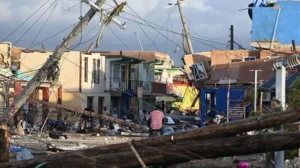
Hurricane Melissa, which hit Jamaica on Tuesday, October 28, 2025 as a Category 5 storm, was a large-scale disaster that had strong emotional effects on those who experienced it, and even for individuals not directly affected. The scope of devastation and loss of lives is very disturbing and hard to comprehend, therefore students, parents and teachers will need emotional and psychological support to help them understand the event factually, and be provided the opportunity to process their reactions as needed before rushing to normalcy.
Dr. Leahcim Semaj, an expert Quantum Transformational Psychologist made it clear in his analysis of the event at the Sixth Conversation of the ’s

The cost of trauma suffered by our students may be twice the cost of the physical damages caused by Hurricane Melissa.
For thousands of students, teachers, and parents, the catastrophic hurricane did not end when the winds died down. Many homes were damaged or destroyed, livelihoods were disrupted, and daily routines shattered. In theparishes of Westmoreland, St. Elizabeth, St. James and Hanover some schools have been significantly damaged or remain emergency shelters, housing displaced families, storing relief supplies, or serving as community hubs for survival. Against this backdrop, the question must be asked; is it wise to reopen schools after such a disaster, and at what cost?
Is it wise to reopen schools after such a disaster, and at what cost?
Schools Reopen, but Trauma Remains
Education policy often treats reopening of schools as a logistical milestone – roofs repaired, debris cleared, utilities restored. Yet trauma does not follow the same timeline as infrastructure repairs. Though we would want to decrease the amount of disruption to education on the premise that access to education and a safe learning environment is lifesaving and life-sustaining, the stark reality is that students are returning to classrooms carrying fear, grief, and instability. Some witnessed flooding, evacuation, or the loss of possessions. Others are sleeping in overcrowded homes or shelters, including the very schools they are now expected to attend. Teachers, too, are navigating personal loss while being asked to provide stability, discipline, and emotional reassurance to their students.
Trauma does not follow the same timeline as infrastructure repairs.
Research consistently shows that trauma directly affects learning. Studies following Hurricane Katrina which battered Louisiana in 2005 found long-term declines in academic performance and increased behavioural challenges among displaced students, particularly when schools reopened before adequate psychosocial support systems were in place (Pane et al., 2008). Similarly, after Hurricane Maria in Puerto Rico in 2017, students experienced prolonged learning loss, emotional distress, and increased dropout risk when schooling resumed amid ongoing displacement and infrastructure failure (UNESCO; Brookings Institution). The lesson from history is clear: reopening schools without addressing trauma does not restore learning it often deepens inequity.
The lesson from history is clear: reopening schools without addressing trauma does not restore learning it often deepens inequity.
The Hidden Contradiction: Schools as Classrooms and Shelters
One of the most striking contradictions in the post-Melissa response is that many schools are being asked to function simultaneously as places of learning and emergency shelters. How does a school resume normal operations when classrooms are occupied by displaced families? How do students concentrate on lessons while sharing space with relief supplies, makeshift beds, or the visible suffering of their own communities? What message is sent when “normalcy” is declared, yet crisis conditions remain?
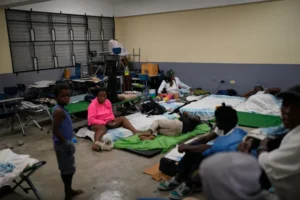
Globally, post-disaster education research warns against rushing reopening in shared-use spaces. Following the 2010 Haiti earthquake, schools used as shelters struggled to re-establish safe learning environments, leading to overcrowding, sanitation challenges, and heightened stress for students and teachers (Inter-Agency Network for Education in Emergencies – INEE). The Jamaican context is no different. When schools serve as shelters, they are fulfilling a vital humanitarian role
Questioning the Haste
Government urgency to reopen schools is often justified by fears of learning loss, meeting the requirements of the Caribbean Examinations Council (CXC) and Primary Exit Profile (PEP) examinations, child safety, and social instability. These concerns are valid. However, haste without holistic support risks turning schools into spaces of pressure rather than healing. The critical questions must be asked (a) Who benefits from rapid reopening; students, or political optics? (b) Have teachers been given time and support to process their own trauma before being expected to manage that of others? (c) Are academic expectations being adjusted to reflect post-disaster realities, or are students being asked to perform resilience? (d) What safeguards exist for children returning from shelters or unstable housing situations?
Evidence from post-tsunami Sri Lanka (2004) and Cyclone Idai in Mozambique (2019) suggests that education recovery is most effective when psychosocial support precedes academic acceleration (UNICEF; Save the Children). Where governments prioritised speed over support, students experienced disengagement, absenteeism, and long-term educational setbacks.
Evidence from post-tsunami Sri Lanka (2004) and Cyclone Idai in Mozambique (2019) suggests that education recovery is most effective when psychosocial support precedes academic acceleration (UNICEF; Save the Children). Where governments prioritised speed over support, students experienced disengagement, absenteeism, and long-term educational setbacks.
Teachers at the Breaking Point
Perhaps the most overlooked consequence of reopening too soon is its impact on teachers. Educators are expected to absorb increased emotional labour; identifying distressed students, managing behavioural challenges, and maintaining academic standards; often without training in trauma-informed practices.
After Hurricane Katrina, teacher burnout and attrition surged in affected districts, weakening education systems for years (American Educational Research Association). If similar patterns emerge post-Melissa, the cost will not only be emotional but systemic. A system that relies on the personal resilience of teachers without structural support is not resilient; it is fragile.
Rethinking What Recovery Looks Like
The central issue is not whether schools should reopen, but how and when they do so. True education recovery requires: acknowledging trauma as a core educational issue, not a side concern; recognising that schools used as shelters cannot immediately function as normal learning environments; sequencing recovery so that safety, stability, and emotional well-being come before academic acceleration. Reopening schools should be a process, not a performance. It should signal care, not pressure.
Reopening schools should be a process, not a performance. It should signal care, not pressure.
Hurricane Melissa has forced Jamaica to confront a difficult truth: education systems are often designed for stability, not crisis. As climate-related disasters become more frequent, the rush to return to normal may itself become a risk. The question is not simply how fast schools can reopen, but whether reopening, as currently structured, truly serves the best interests of children, teachers, and communities still in recovery.
Recommendations for re-opening and future disasters
Right across Jamaica, public schools are designated emergency shelters for communities when there is a natural disaster – such as hurricane. The response phase by Ministry of Education after Hurricane Melissa shows that there was no plan and :
– who lost family members, homes, animals, school resources etc during the hurricane
– who are still living in devastated communities, emergency shelters or make-shift homes covered with tarpaulins
The purpose of this exercise would be to:
- organise and dispatch teams of Guidance Counsellors from other parishes that were not affected by the hurricane to assist students, teachers and parents who are still experiencing trauma.
- use schools as key screening sites for post-disaster symptoms (National Institute of Health).
- make requests through local or international agencies to provide professional volunteers to work with our Guidance Counsellors to provide tiered support for our children.
Recent experiences and lessons learned from Hurricane Melissa demonstrate the need for greater investment in disaster risk reduction and therefore, we are recommending that the Ministry of Education and the Office of Disaster Preparedness and Emergency Management (ODPEM) assist school leaders to develop and implement multi-hazard approach
References
American Educational Research Association (AERA). (2010). Educational recovery after natural disasters: Lessons from Hurricane Katrina. Washington, DC: AERA.
Brookings Institution. (2018). The long road to recovery: Education outcomes in Puerto Rico after Hurricane Maria. Washington, DC: Brookings Institution.
Inter-Agency Network for Education in Emergencies (INEE). (2010). Minimum standards for education: Preparedness, response, recovery. New York, NY: INEE.
Inter-Agency Network for Education in Emergencies (INEE). (2016). Psychosocial support and social and emotional learning for children and youth in emergency settings. New York, NY: INEE.
Lai, B.S., Oliveira, G., Lowenhaupt, R., Montes, M., & Riobueno-Naylor, A (2024). The important role of schools following disaster events. National Institute of Health. MD.
Pane, J. F., McCaffrey, D. F., Kalra, N., & Zhou, A. J. (2008). Effects of student displacement in Louisiana during Hurricane Katrina. Santa Monica, CA: RAND Corporation.
Save the Children. (2019). Education disrupted: Disaster impacts on learning and child wellbeing. London, UK: Save the Children International.
UNESCO. (2011). Education in emergencies and post-crisis transitions. Paris, France: UNESCO.
UNESCO. (2019). Behind the numbers: Ending school violence and bullying. Paris, France: UNESCO.
UNICEF. (2019). Guidelines on mental health and psychosocial support in emergency settings. New York, NY: UNICEF.
UNICEF. (2020). Rebuilding education systems after disasters: Lessons from Haiti, Sri Lanka and Mozambique. New York, NY: UNICEF.
World Bank. (2020). The impact of disasters on education systems and learning outcomes. Washington, DC: World Bank.
World Meteorological Organization. (2021). Weather-related disasters increase over past 50 years, causing more damage but fewer deaths. WMO.
Amorkard Brown is a Master Teacher, a Councillor in the Westmoreland Municipal Corporation and the 2025 – 2027 President of the Philosophy of Education Movement of the Caribbean – Jamaica Chapter.
Patricia Scarlett-Forrester is the principal at Pisgah Primary and Infant School located in the parish of St. Elizabeth. She has served as a classroom teacher for 18 years and as a school principal for 13 years.
In my opinion, education does not have an age limit. I therefore say that it’s best to get the mental state of persons who experienced the traumatic event of both Hurricanes Beryl and Mellisa back to a comfortable state. Individuals were still recovering from Beryl when Mellisa hit. Even rain with winds still bring back the memories.
I thinks it’s imperative that these students are properly counseled and put back in a proper state of mind. It’s very hard to get these students to focus on school work when so much is going on with them
This article raises some of the same questions I have asked from the day we resumed school. The narrative that students must return to some normalcy was a driving force for many administrators. However, when I posed the question of how do we adequately cater to the emotional needs of our students, educators etc I was met with uncertainty. I still believe that until all stake holders emotional well being is assessed and the necessary psychosocial help provide, we won’t be able to move forward ! The suggestions shared in this article are worth exploring.
Very insightful article. I dare say I am a psychologist who went on a few of the response teams, and kudos to the interventions and the thoughts behind it but alas! the follow-up and referral system is woefully inadequate, teachers complaining that there is nowhere to refer children when they identify problems, they themselves have no outlet to see professional help, persons on the ground who are able to identify that they need immediate help when they turn up at the hospitals they are not priority as the hospitals are overwhelmed with physical trauma cases. What the MOHW has on paper of what should happen is not taking place on the ground. Among other things I believe we need a hotline specific to post Melissa psychological support and a strong and clear referral system.
A very powerful article that echos the silent thought out loud. What efforts are being put in place to address the mental strain caused by Hurricane Melissa? Is the road to recovery especially in the affected parishes a facade? Normalcy will return however not overnight.
I am impressed with the analysis of the writer/s.this goes to show how short sighted Government bodies are , the responsibility to deal with and manage support systems after a disaster of this magnitude is gone with the wind.I am thankful that individuals such as the writers can share their knowledge and insights on the real situation that people are going through. Thanks for this article.
This article highlights some of my own concerns. It was a very traumatic experience for me. As a teacher myself, I am very happy to be on vacation leave. I honestly am not mentally ready to be teaching students who suffered the same or even worse courtesy of Melissa. As one who had to even manage a shelter, many times, I had to suppress my emotions to cater to shelterees while also attending to my family and engaged in studies online. Sighs, it’s been a tough few months, very traumatic. Thanks to God, family and good friends, they showed up…but as for the government/ministry of education, they need to get their priorities right!